Deep Seas: Systems Strategy Interaction
Varadraj Borde
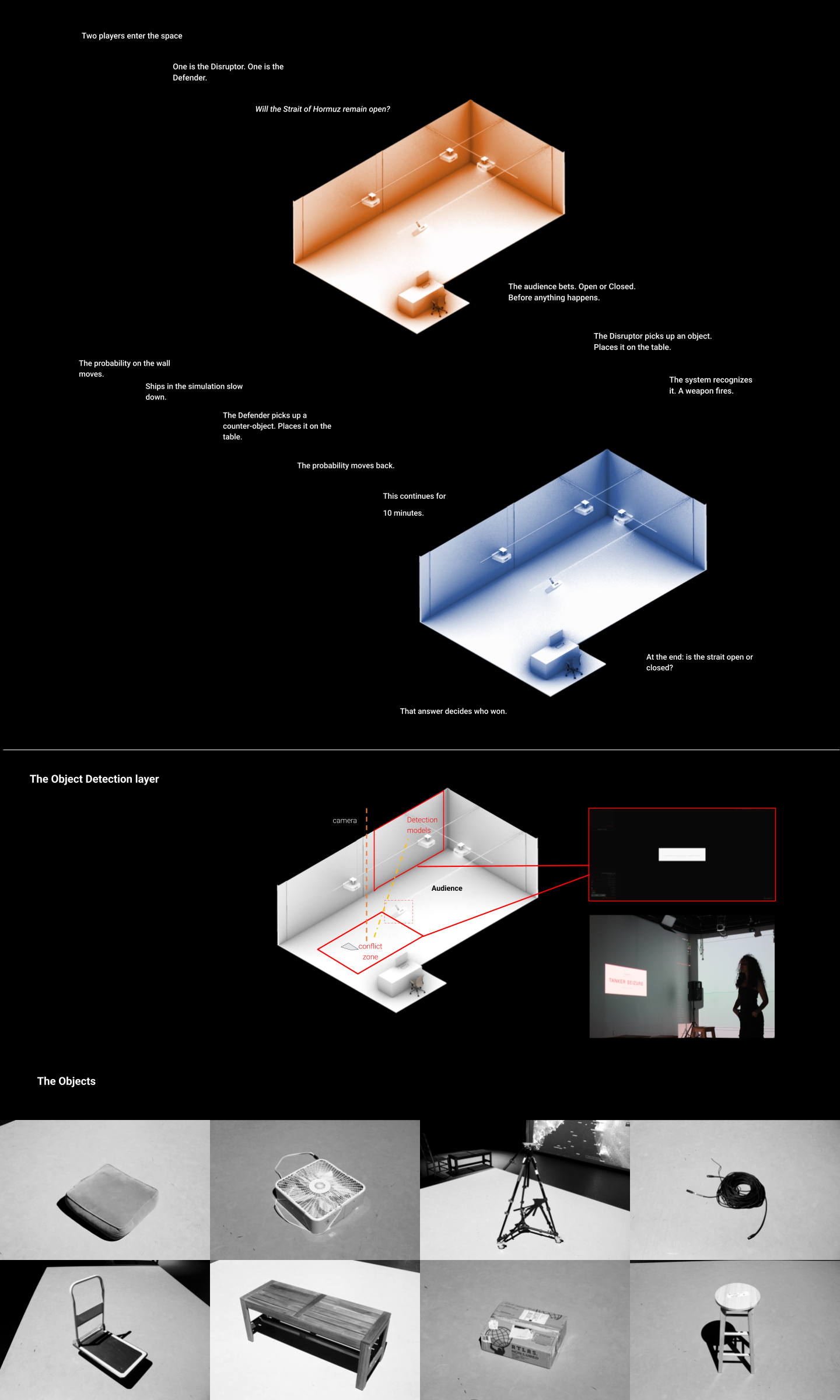
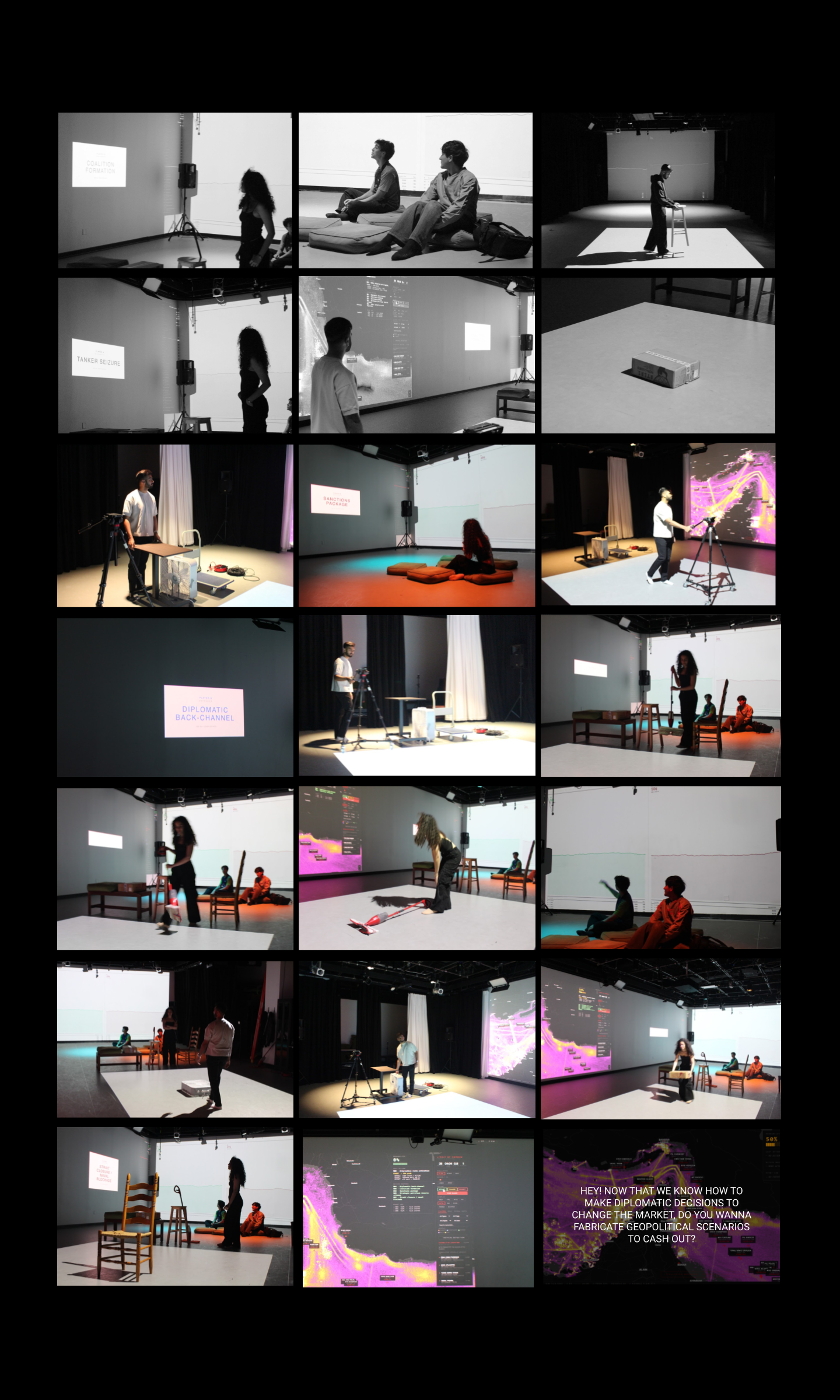
Deep Seas is an interactive two-player installation that stages prediction markets as a lived geopolitical experience. Set in the Movement Lab at Columbia GSAPP, the work draws on MacKenzie's performativity theory — the argument that markets don't merely reflect reality, they constitute it.
One player acts as Disruptor, one as Defender. Physical objects placed on a table are detected by a webcam and mapped to geopolitical "weapons" — naval blockades, sanctions packages, tanker seizures — that alter a live maritime simulation of the Strait of Hormuz. A mobile audience bets on whether the strait remains open by round end.
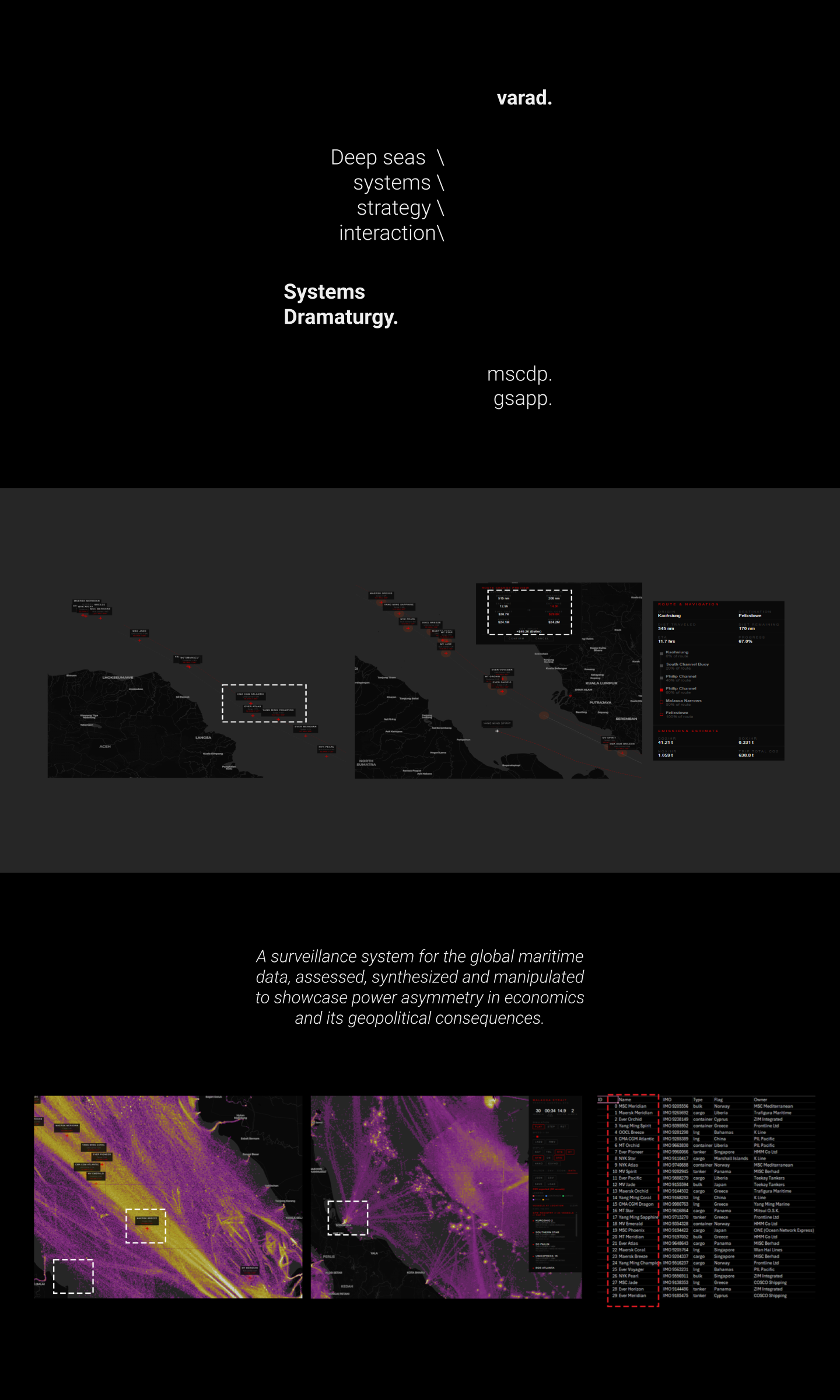
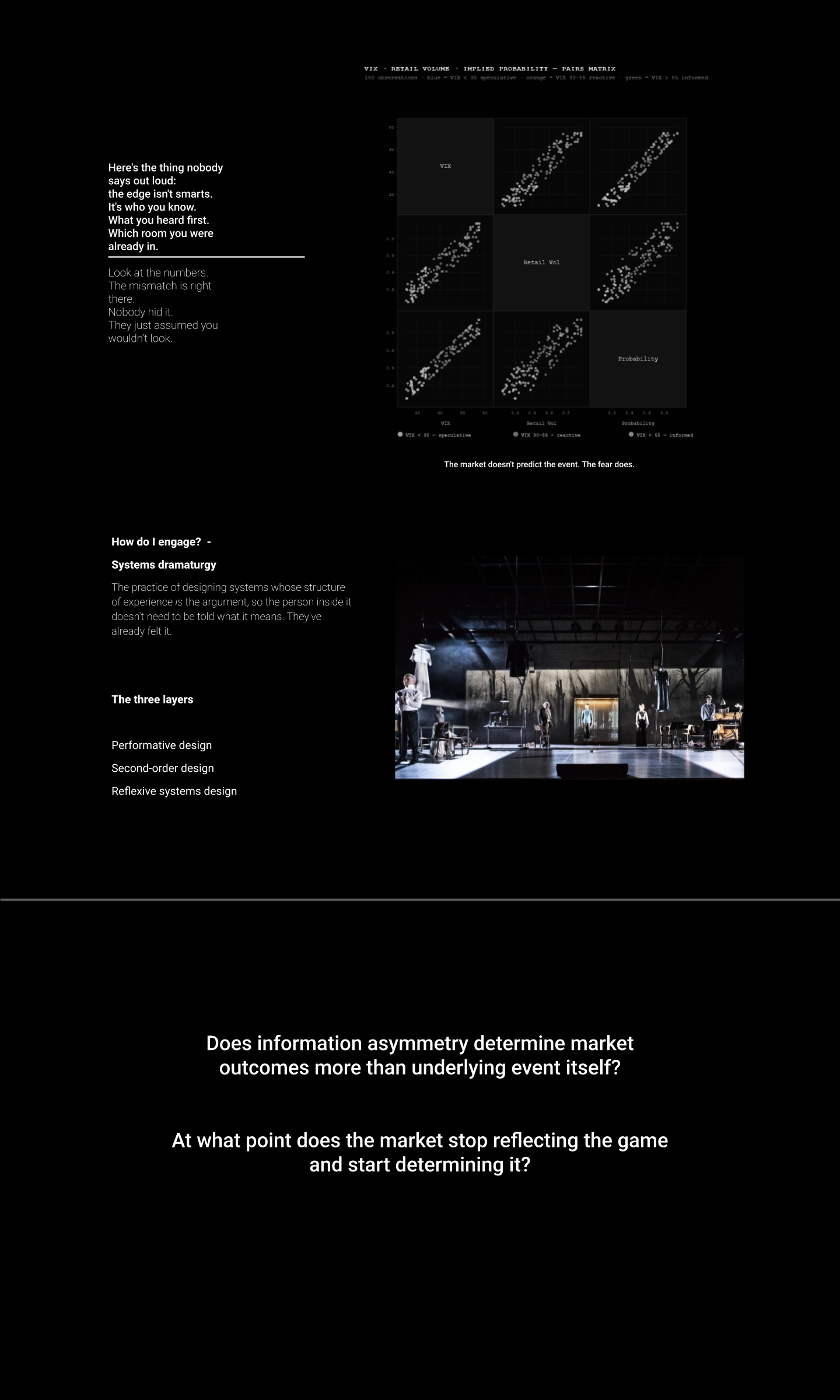
The April 2024 Iran-Israel event serves as the empirical anchor: prediction market volume ballooned to $155 million before a single missile was fired. The market knew. The physical event had not happened yet.
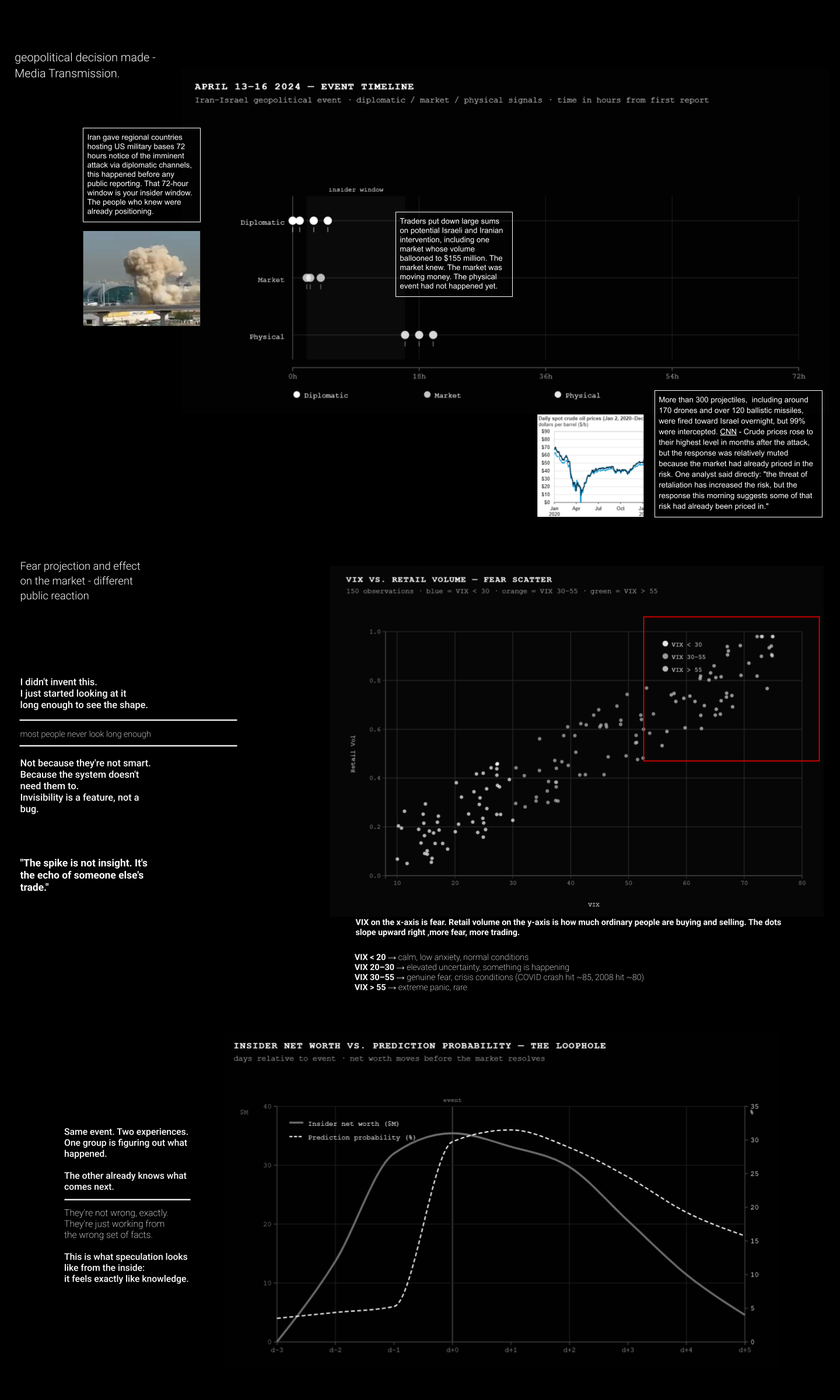
The system runs on a single HTML file combining Leaflet.js mapping, GFW vessel tracking tiles, MediaPipe hand detection, and a 12-weapon effect matrix governing ship count, speed, lane access, and fear dampening.