AfterGlow: A Playable System of Light and Spatial Power
Jeremy Gu
AfterGlow
AfterGlow is a computational design and game prototype that translates real-world cases of spatial control through lighting into a playable system. The project asks how illumination affects movement, rest, visibility, emotional safety, and social response. Instead of treating light only as atmosphere, the game treats light as an active spatial rule: it can invite, expose, protect, displace, guide, or exclude.
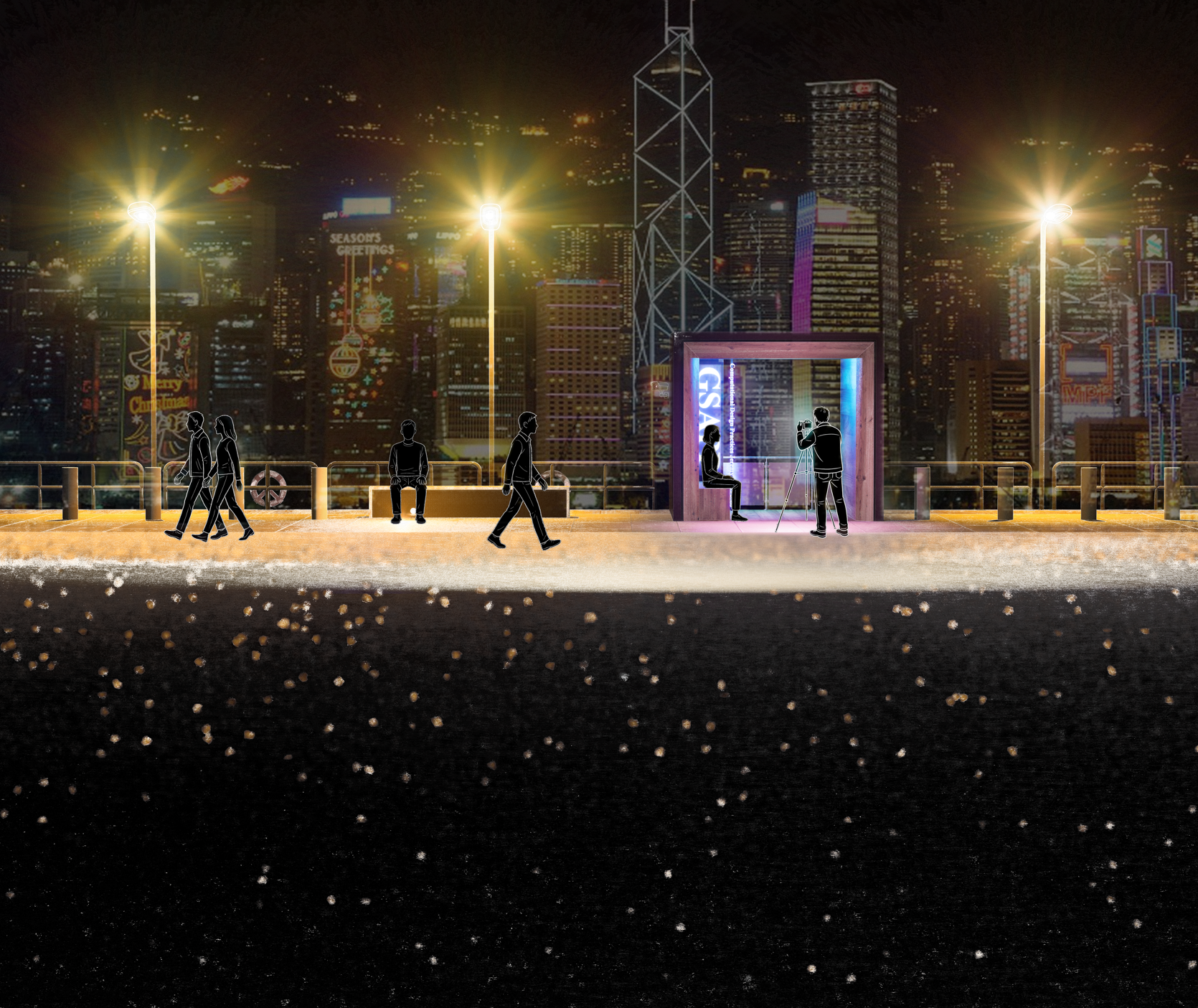
Project Statement
The starting point of this project is a simple observation: lighting in public space is never neutral. A bright shelter, a dim passage, a colored advertisement panel, or a controlled transit corridor can change how people move, wait, rest, and feel. In many urban environments, light becomes a quiet instrument of spatial governance. It does not physically block the body, but it can still shape behavior by producing exposure, discomfort, attraction, safety, or avoidance.
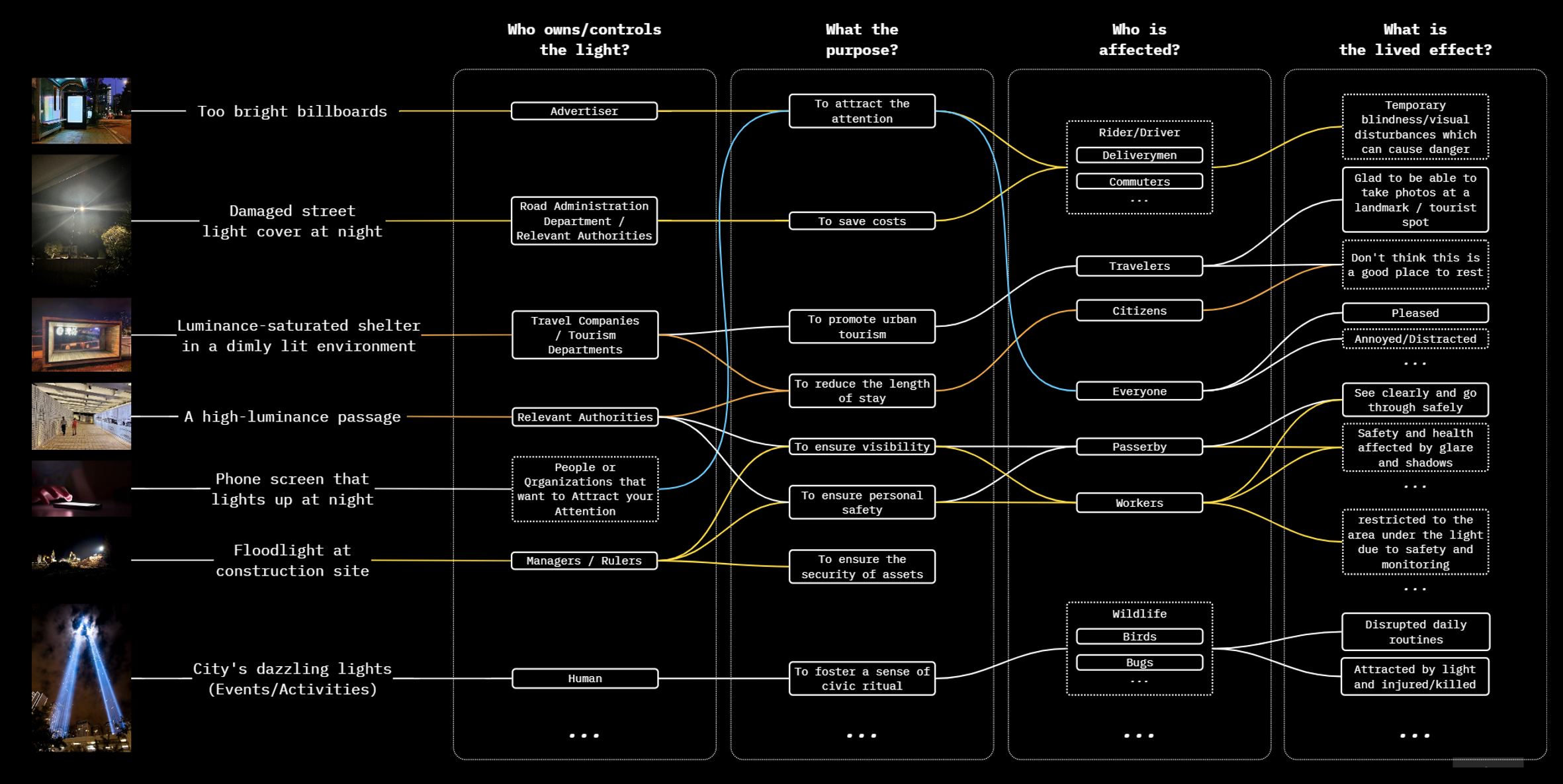
AfterGlow turns this relationship into a game system. Players encounter a metro-like environment where light conditions affect both spatial experience and social behavior. By operating an engineering panel, players can change lighting zones, adjust visibility, and observe how virtual passengers respond. The project uses game design as a way to test spatial questions: who controls the light, what purpose does it serve, who is affected, and what kind of feeling or behavior does it produce?
Concept Development
The project was developed from research on urban lighting, safety perception, and emotional response. Rather than simply using lighting as decoration, the prototype frames lighting as a mediating layer between the built environment and public behavior. The design process translates real-world lighting phenomena into game mechanics through three linked questions:
-
What does the light do spatially?
It can open a path, mark a boundary, reveal a body, create glare, or produce a sense of exposure. -
What does the light do emotionally?
It can create comfort, anxiety, attraction, unease, safety, or alienation. -
What does the light do systemically?
It can influence where non-player characters gather, avoid, rest, move, or disappear.
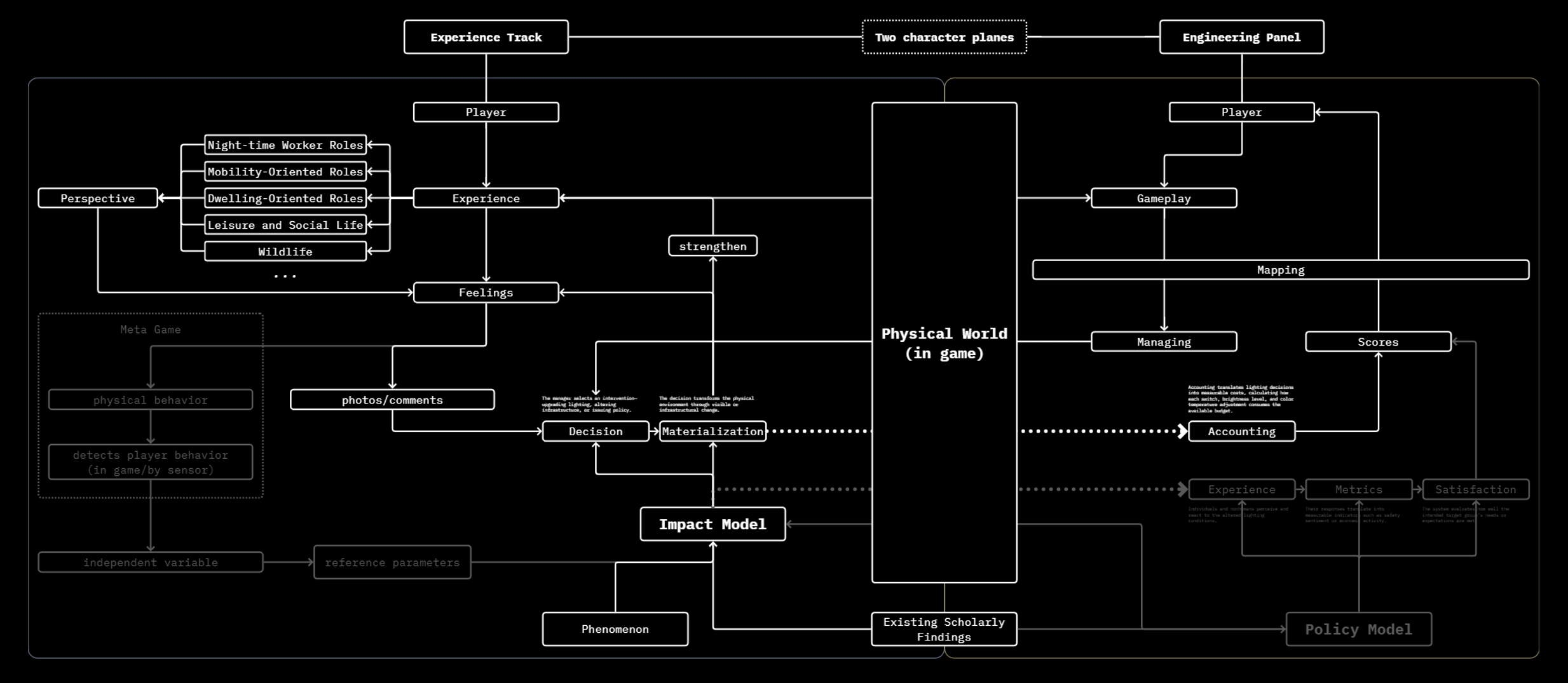
The game architecture connects these layers into a playable feedback loop. The player makes lighting decisions, the environment materializes those decisions, and the system evaluates how people respond.
Visual Direction
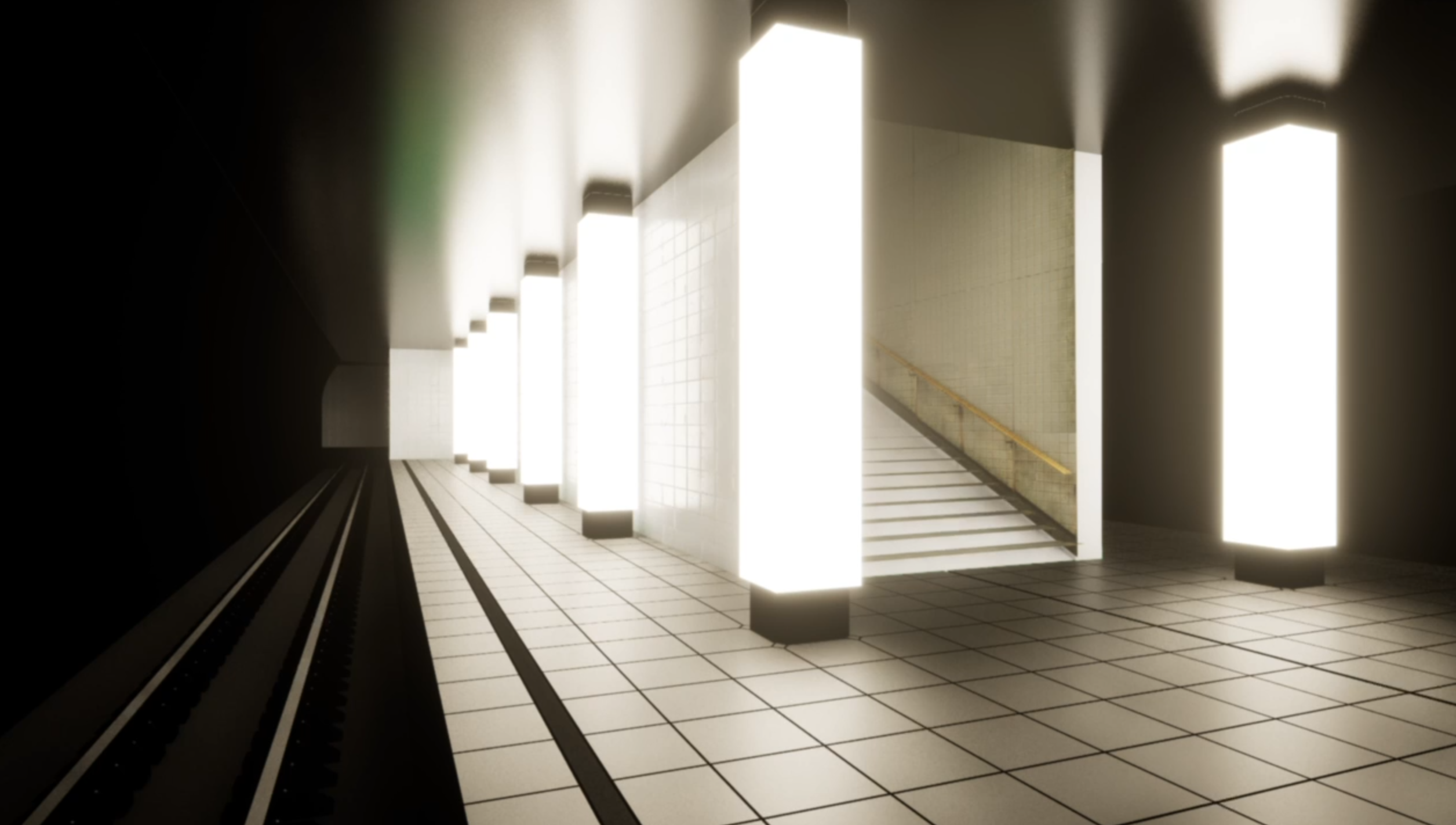
The visual direction combines the language of public transit infrastructure with a more speculative, atmospheric lighting system. The environment is recognizable as a metro station, but the lighting pushes it toward a psychological and theatrical space. White institutional lighting suggests control, cleanliness, and exposure. Colored lighting creates attraction and spectacle, but also visual pressure and discomfort.
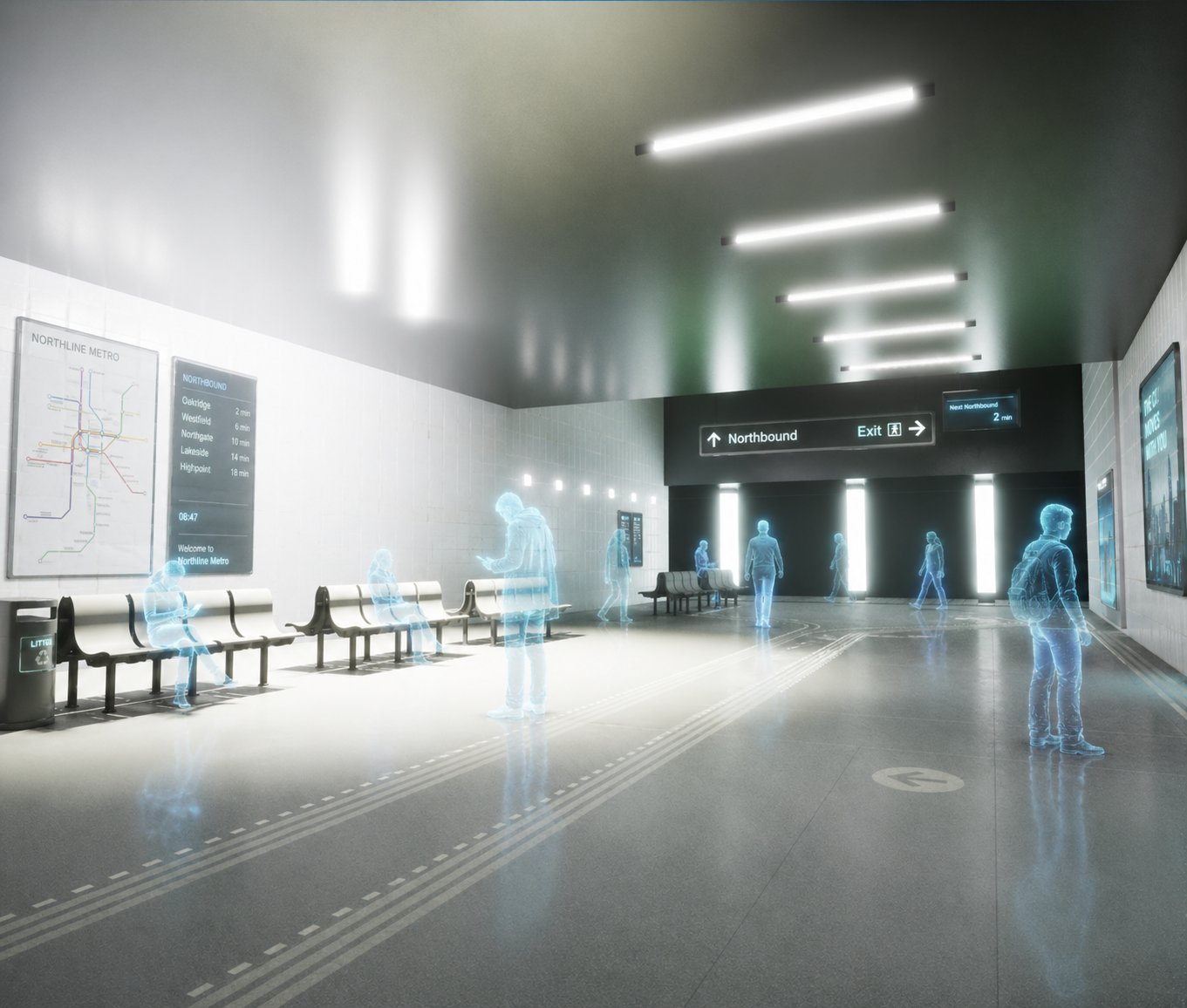
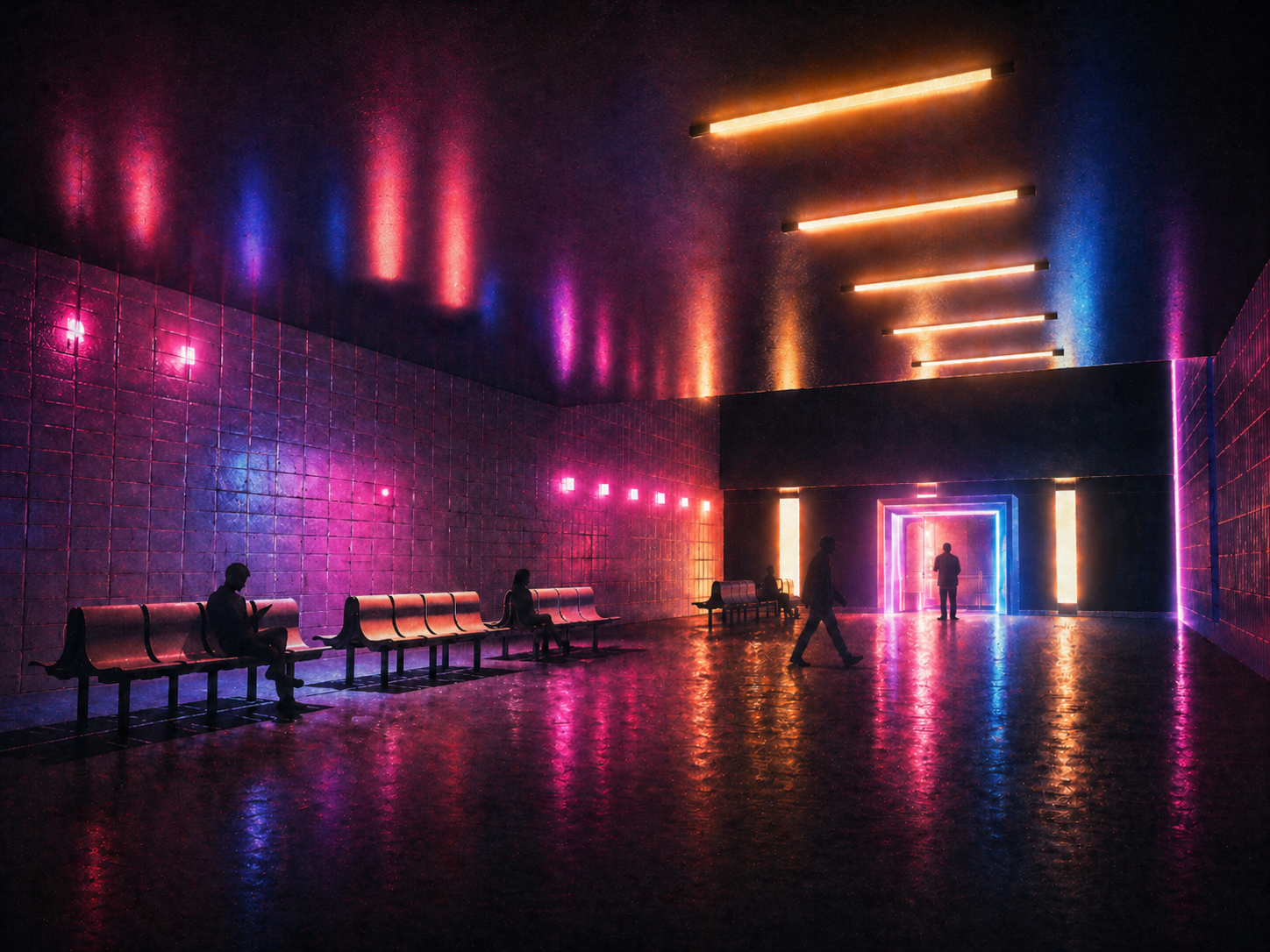
These two concept images define the core tension of the project. The first image presents a space of visibility, management, and institutional brightness. The second image turns the same spatial language into a more ambiguous environment, where colored light becomes seductive, unstable, and potentially hostile. The final prototype moves between these two states.
Level Design
The level is organized as an experiential track. Players move through a transit environment composed of waiting areas, corridors, thresholds, and platform-like spaces. Each zone has a different relationship to light: some areas are overexposed, some are dim, some are colored, and some are controlled through the engineering interface.
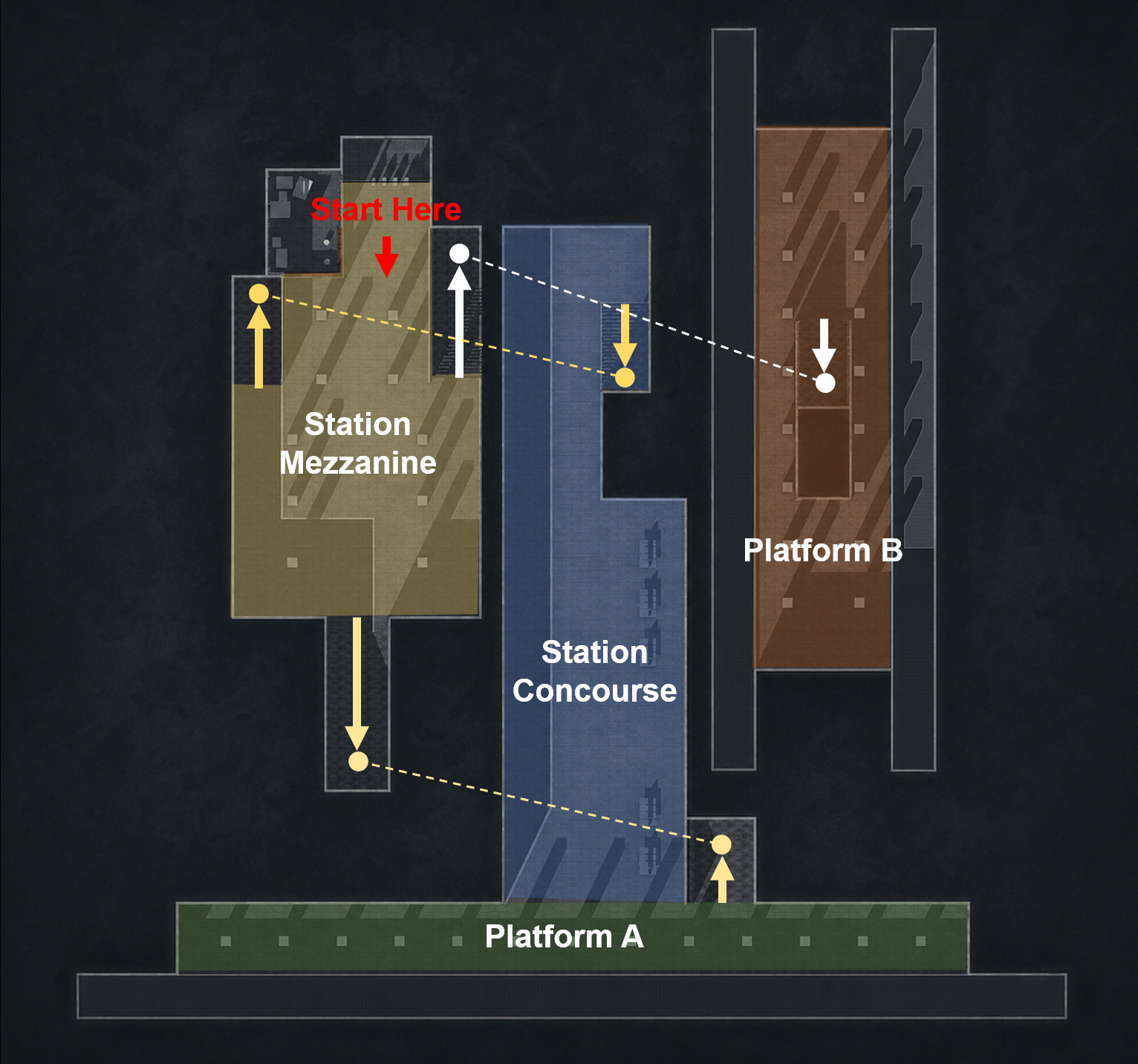
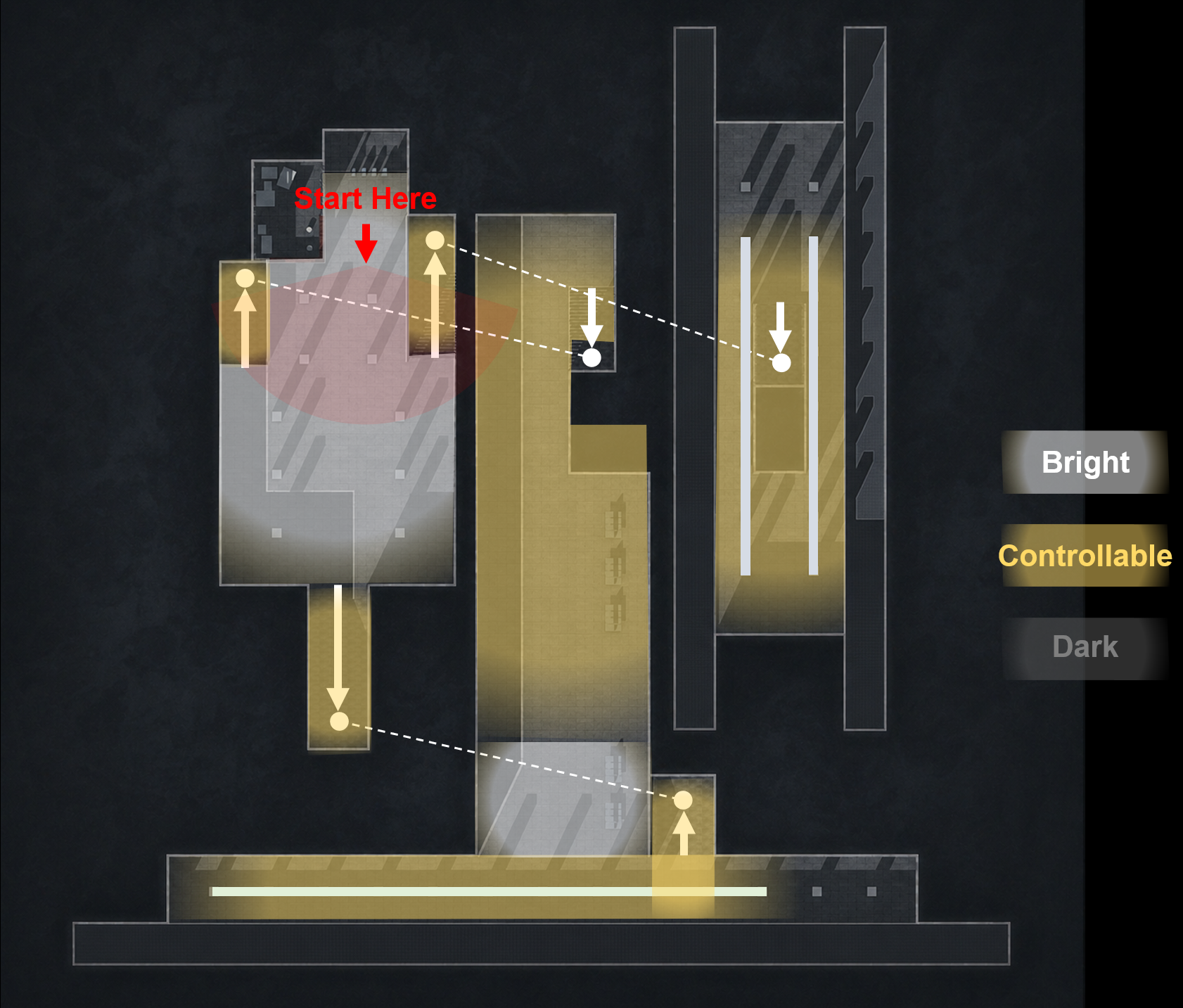
The map separates spatial zones from lighting zones because the project is not only about where the player moves. It is also about how invisible systems are layered onto visible space. A single corridor can contain multiple lighting conditions, and a single lighting control can influence several behavioral zones at once.
Engineering Panel
The engineering panel is the main interface through which the player changes the lighting system. Instead of presenting lighting as a purely aesthetic choice, the panel makes lighting feel like infrastructure. Players operate switches and sliders that affect light color, intensity, and zone activation.

The panel is structured around three operations:
- Decision: the player decides which lights are active and how they should behave.
- Materialization: the decision becomes visible through changes in brightness, color, and spatial atmosphere.
- Evaluation: the game system calculates how lighting conditions affect visibility, comfort, movement, and social response.
This creates a loop between interface, environment, and behavior. The player is not only adjusting a visual effect; they are participating in the production of spatial conditions.
Holographic Figures and Social Response
The prototype uses holographic human figures to represent passengers, users, or affected bodies within the station. These figures are not meant to be detailed individual characters. Instead, they function as behavioral indicators. Their presence makes the lighting system legible: where people gather, where they hesitate, where they sit, and where they avoid.

The translucent visual style also supports the project theme. These figures are present but fragile, visible but not fully solid. They help express how people in public space can be seen, tracked, exposed, protected, or displaced by environmental systems.
Game References
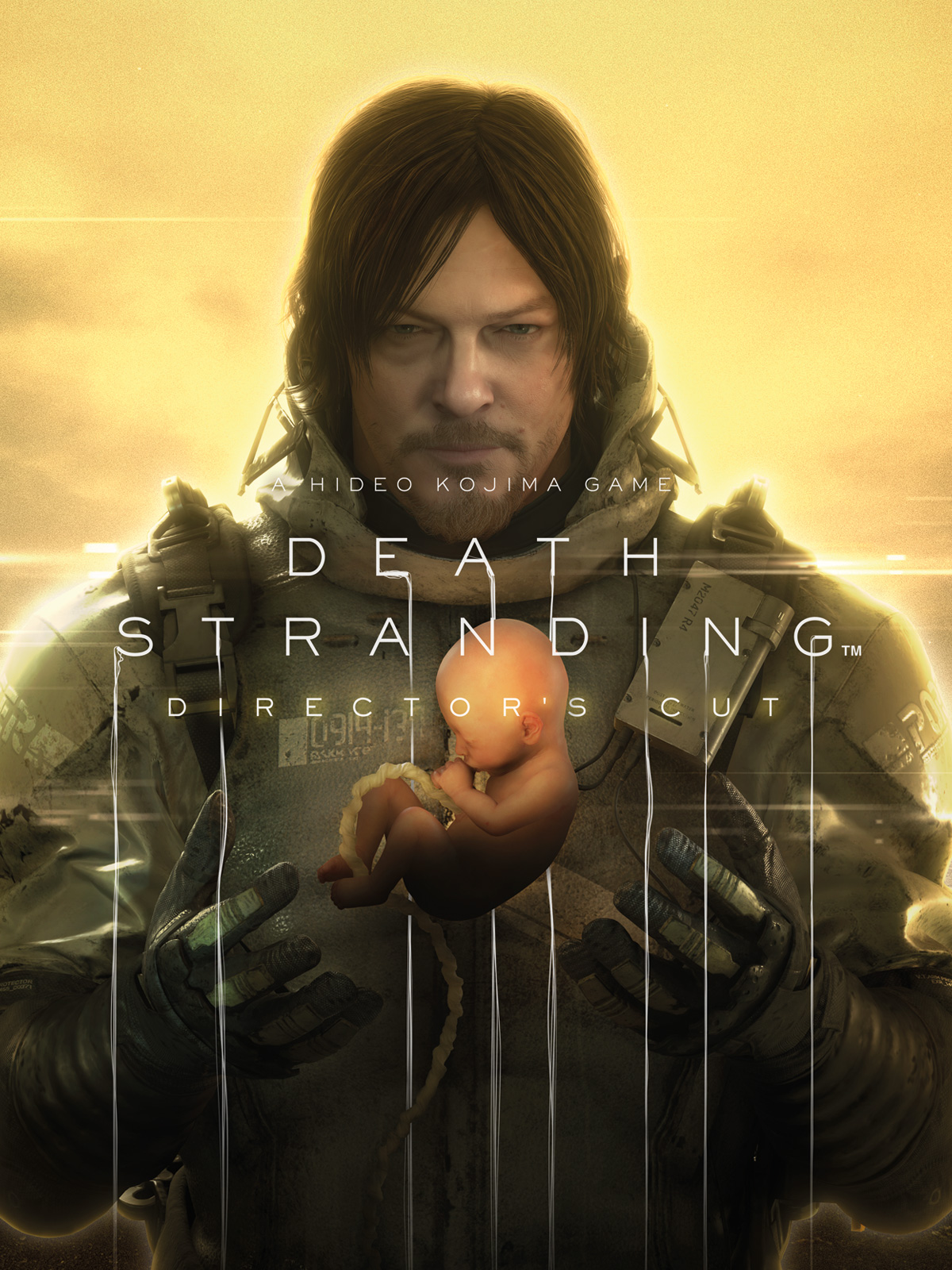
The project draws from games that use space, movement, light, and atmosphere as central design tools. These references informed the project not as direct visual templates, but as examples of how game systems can communicate social, emotional, and spatial ideas.


Design Contribution
AfterGlow uses game design to make a normally invisible spatial system playable. In everyday public environments, lighting decisions are often made by authorities, property owners, designers, or infrastructure managers. Users experience the consequences, but rarely see the control system behind them. This project reverses that relationship by placing the player inside the role of the lighting operator.
The project therefore works between design research and game prototyping. It is not only a representation of urban lighting, but also a small simulation of spatial power. By changing light, the player changes how space feels, how bodies appear, and how movement becomes possible or uncomfortable.
Future Development
Future versions of the project could expand the current prototype into a larger playable system. Possible directions include more complex NPC behavior, stronger feedback between emotional states and movement patterns, additional public-space scenarios, and a clearer game economy around energy, safety, comfort, and control.

In the next stage, the project could also develop from a single metro environment into a set of urban lighting case studies. Each level could focus on a different lighting condition: hostile brightness, commercial spectacle, safety lighting, surveillance lighting, emergency lighting, or informal darkness. Together, these scenarios would form a playable archive of how light organizes public space.
References
Boomsma, C., & Steg, L. (in press). Feeling safe in the dark: Examining the effect of entrapment, lighting levels, and gender on feelings of safety and lighting policy acceptability. Environment and Behavior.
LUCI Association. (n.d.). Urban Lighting for Health and Wellbeing: New Guidelines. LUCI Publication.
Van Rijswijk, L., & Haans, A. (2018). Illuminating for safety: Investigating the role of lighting appraisals on the perception of safety in the urban environment. Environment and Behavior.
Van Rijswijk, L., & Haans, A. (2017). Illuminating for safety: Investigating the role of lighting appraisals on the perception of safety in the urban environment.
Exploring urban lighting design effects on citizens' emotions through the application of Kansei methodology.