Pass It On: A Forward-Facing Chain of Custody for Clothing
Violet Hyun
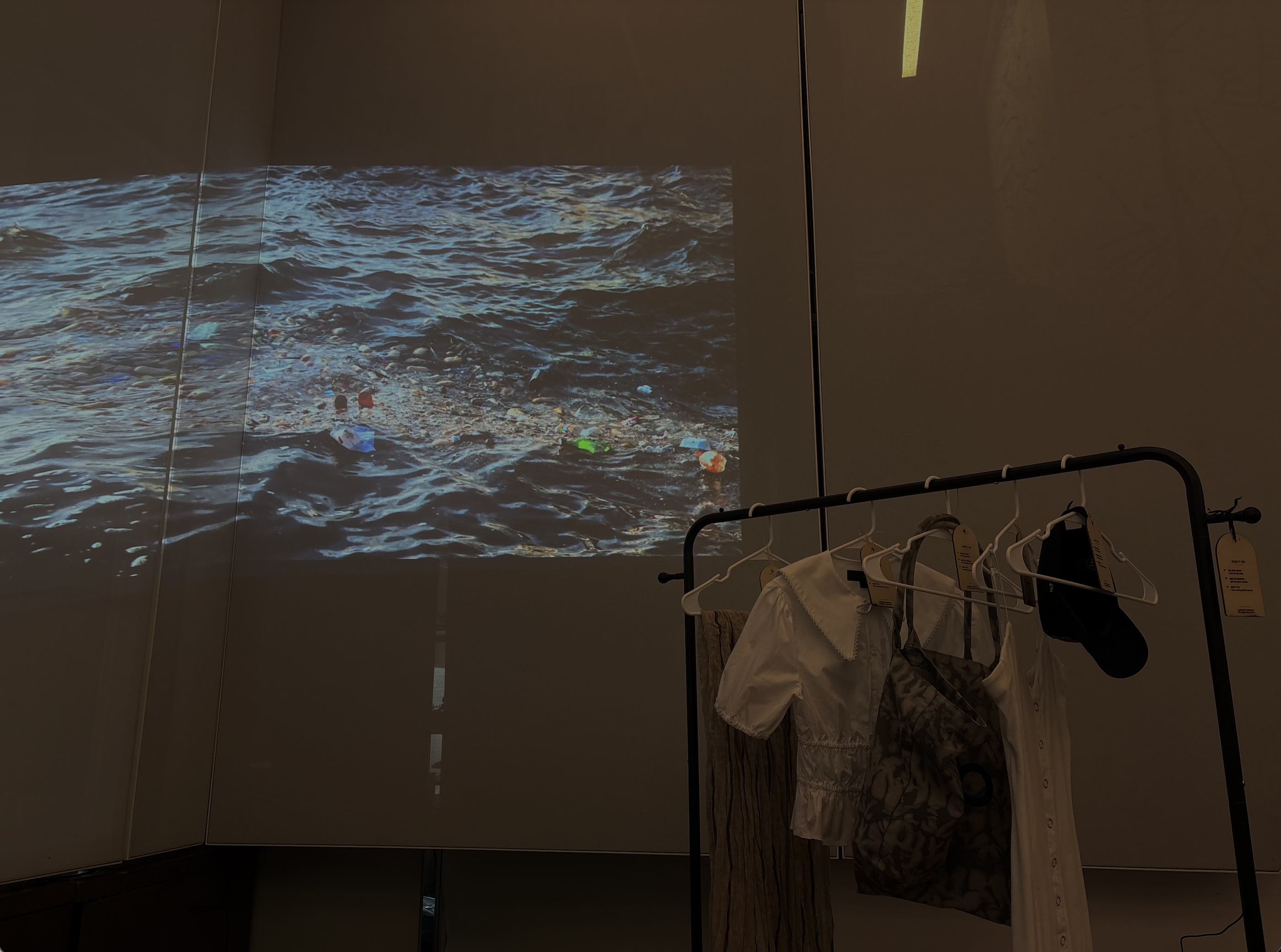
Pass It On is a speculative product and physical prototype that explores how garments can carry a visible chain of custody.
The project asks a simple question: what if clothing could retain memory?
Today, most garments lose their history the moment they are sold. We know little about where they came from, who wore them, or how they moved through different lives. This absence of memory contributes to a culture in which clothing is treated as disposable.
Pass It On introduces a mobile platform and NFC-enabled garment tag that records ownership over time. By scanning the tag, users can access a garment passport that reveals material information, ownership history, and notes left by previous owners.
The goal is to shift how people define value—from novelty to narrative.
Research
To understand why clothing remains unused, I surveyed 50 participants between the ages of 19 and 26 and conducted 8 follow-up interviews.
Three recurring themes emerged:
- Overconsumption — people buy more than they need.
- Disposal anxiety — people feel guilty letting go of clothing.
- Friction — reselling and donating require too much effort.
These behaviors create a self-reinforcing loop in which unwanted garments remain stored rather than recirculated.
Design Strategy
The project focuses on the handoff moment.
If releasing clothing feels emotionally rewarding, users are more likely to let items circulate.
The design strategy is built around three principles:
- Reward the release
- Make demand visible
- Replace guilt with story
System Overview
Pass It On combines a mobile marketplace with a physical NFC tag embedded in the garment.
The mobile app is organized into four main areas:
- Explore — Discover available garments.
- My Closet — Manage outgoing items.
- My Bag — Track incoming items.
- Profile — View ReLeaf points and ownership history.
The physical prototype consists of a fabric hang tag containing an NFC chip. Scanning the tag opens the garment passport.
Garment Passport
Each garment has a dedicated digital record containing:
- Product information
- Material details
- Supply chain transparency
- Chain of custody
- Messages from previous owners
This transforms the garment into a living record rather than a static object.
Prototype
The prototype was built in Next.js and deployed on Vercel. It demonstrates a full end-to-end flow from listing a garment to transferring it to a new owner.
Interactive preview (embedded live app):
If the preview does not load here (some browsers block embedding), open the prototype in a new tab.
Reflection
Pass It On reframes secondhand clothing as a carrier of memory.
By making ownership visible, the project suggests that garments can gain value as they move through more lives.
Instead of asking, “Who owned this before me?” the project asks:
“What stories become possible when we choose to pass it on?”