Uncontrolled Environments
Aline Theodorakis
The design paradigm of today is often human-centric, but in order to move towards a more sustainable future, we need to adopt a more nature-centric design view. Rather than imposing human systems onto the environment, as designers we should study how living systems solve problems of growth, adaptation, resource distribution, and resilience.
When harnessing the innate computational traits of the interaction between plants and mycelium, what biological processes can we extract and recreate to produce a living, self-sufficient architectural system?
Relationships, communication, and encounters between non-human elements are at the core of this research. I'm interested in exploring signaling and communication between plants, mushrooms, and different elements of nature that we cannot see at a human level. These encounters lay at the intersection point of the natural and the technological, in which they aim to achieve symbiosis. These studies can open up new possibilities for thinking.
Plants and fungi perform natural computation and chemically respond to changes in the external environment — they are able to manifest complex computing functions such as metabolism, self-growth, self-production, and adaptation to external and internal stimuli. Mycelium networks grow, reorganize, and respond dynamically to their environment, supply nutrients where needed, and offer systems that can maintain their functional integrity even when partially damaged. With plants and mycelium in close proximity, their growth will intertwine and form a communication network. This project investigates what we can learn from these species to establish new design principles based on self-sufficiency and logic of biological systems.
This project considers a speculative future in which these living architectural systems are scaled up, or inserted into an algorithm, giving way for a design that can grow, assemble itself, and adapt to its environment. To work towards this speculative future, I'm encouraging us as humans to develop a deeper understanding of the systems that are at play in our surrounding environment. We need to better understand that there are other ways of being outside of the human's perspective.
In this project, I have created an installation through varying sensing and technological techniques that visualize plants and fungi responding to different environmental factors. The outcome informs us of the processes, systems, and timescales we should take into consideration when designing for non-human species.
When establishing this system, I must consider the rules in which the system operates under. What is the dialogue between each species in the system? Can the logic be attributed to a reward/cost system? I also must consider my role as a human when designing for non-human species. What role do I play, and how much or little do I need to intervene?
When designing for the non-human, we must also consider that different species operate under different time scales and grow at different rates. Our perception of computing is constantly striving towards a faster system, but this is based on human time. As humans, society is telling us to become more optimal and time-efficient, but plants and fungi don't operate with this logic. Perhaps when designing, we need to reframe whose timescale we're operating on.
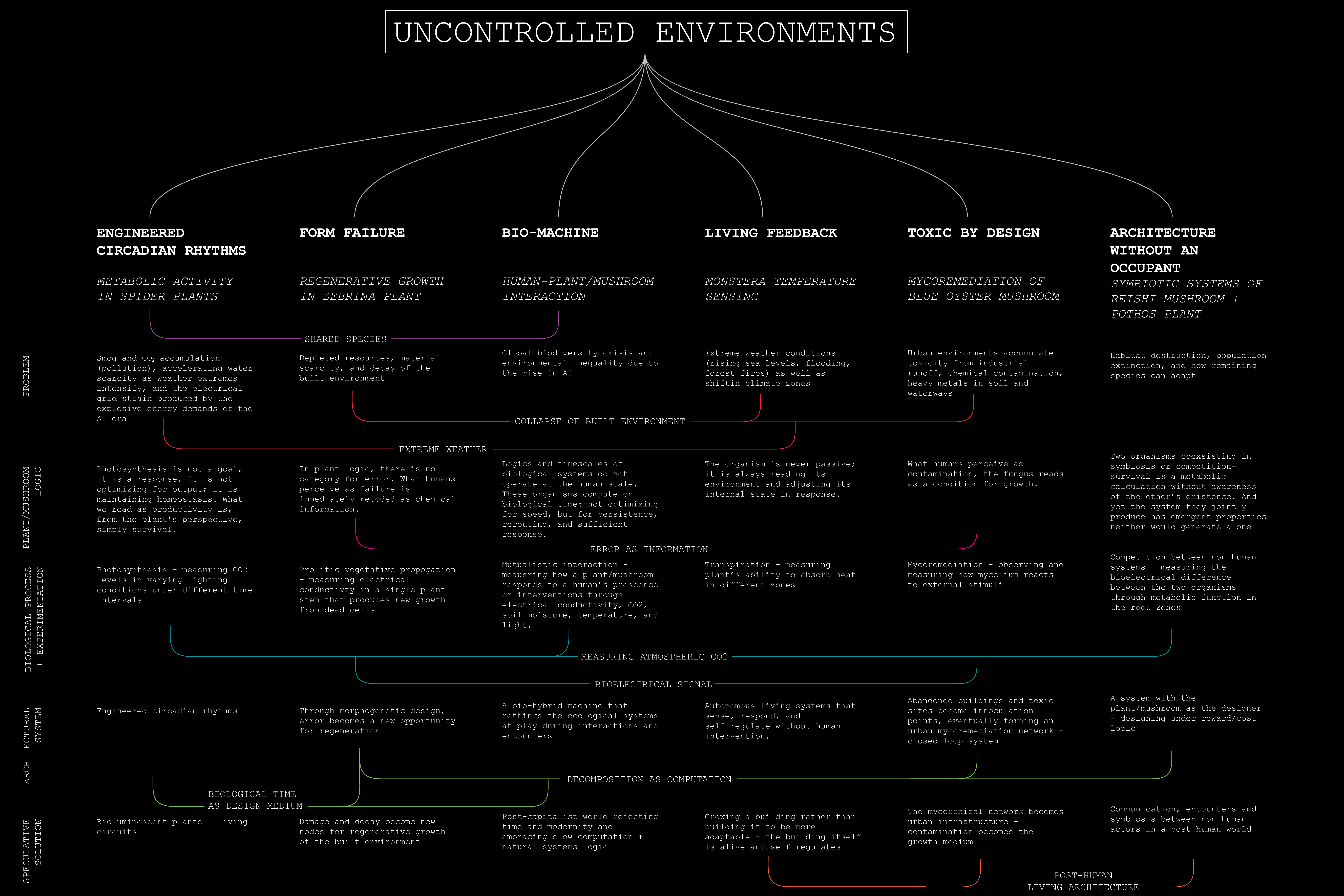
This diagram demonstrates the six different experiments that make up the project. Each experiment begins by addressing a current day environmental problem that needs to be addressed by a collaboration of designers, researchers, scientists, and environmentalists. Each establishes a species and a form of environmental monitoring, approaching the problem through a lens of a plant or mushroom logic, and translates it into an architectural system, resulting in a speculative design project that presents a solution to the current issue.
I'll go into depth for three of the experiments, and for the sake of time I'll give a high level overview of the other three.
Bio-machine looks at the interaction between a human and a spider plant, as well as the interaction between a human and a mushroom, using multisensor data to live track how the plant is reacting to physical touch, and other external stimuli enforced by the human. The organism acts as a biosensor.
This experiment attempts to reimagine the relationship between the plants and mushrooms with humans by creating live visual reactions, making the argument that biological systems do not operate at the human scale or timeframe. This is an attempt to visualize a plant's reaction, leading us to think more deeply about the alternate systems at play.
In this experiment, different forms of stimuli were introduced to the plant, while humidity, co2, temperature, heat, and proximity sensors collected data and visualized a spike from the plant and mushroom when it was either touched, watered, breathed on, or introduced to a new lighting condition.
In a future where we face a biodiversity crisis, how can designed environments make space for other species as active participants rather than passive inhabitants? At the same time, the accelerating infrastructure of AI and computation is deepening environmental inequality — extracting resources, compressing time, and optimizing systems according to human logics that have no place for slowness, for growth, for the non-linear. This project asks what would it mean to develop a genuinely symbiotic relationship with fungi and plants — not as resources, not as aesthetics, but as co-designers in a post capitalist world in which humans embrace slow computation, learning from, and with other living species.
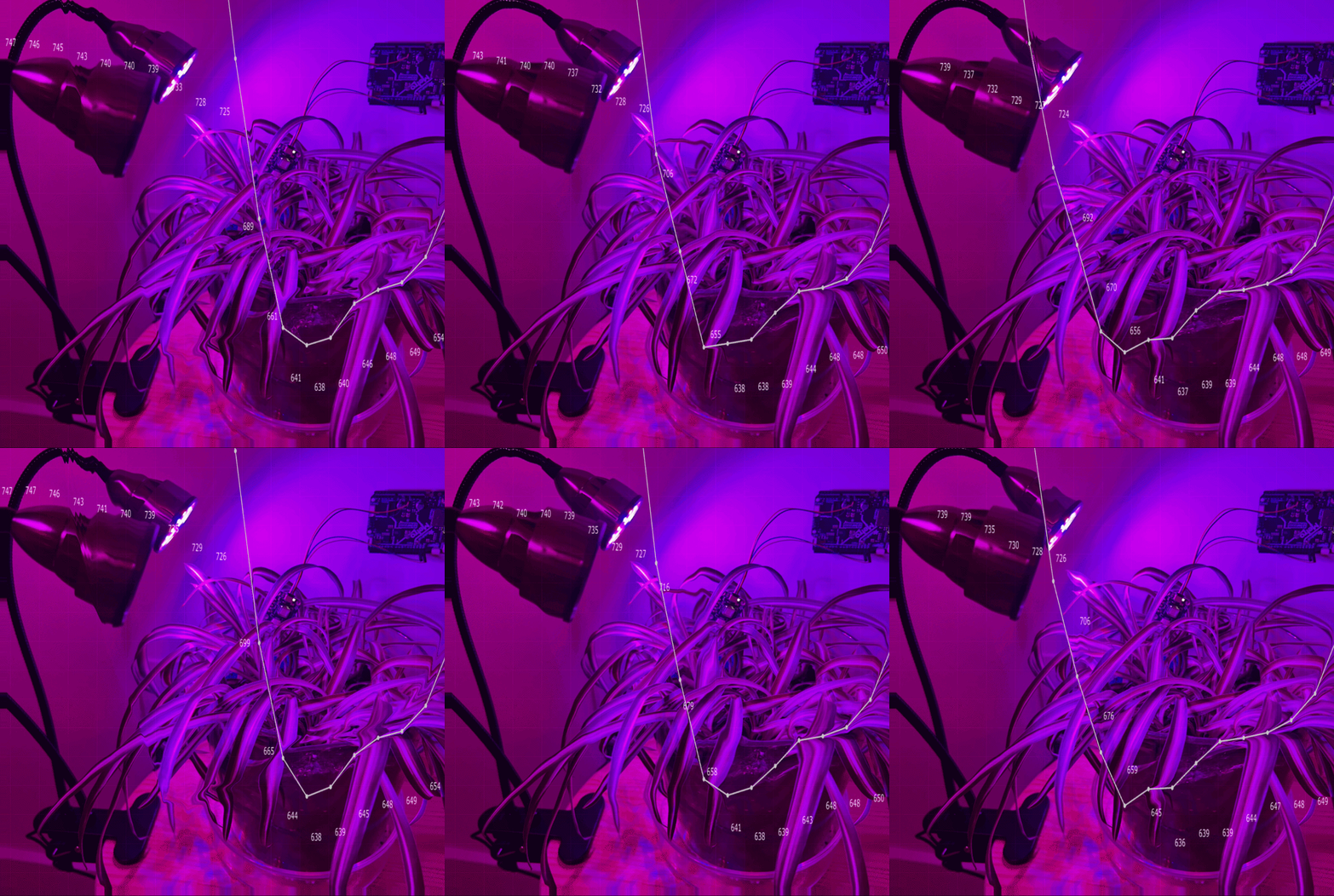
Engineered Circadian Rhythms captures and measures the metabolic activity in spider plants by measuring its ambient CO2 capture over a 24 hour period, essentially attempting to measure the photosynthesis process and identifying whether plants respond primarily to light or if they are more in tune to operating on a 24 hour circadian rhythm.
From the plant's point of view, there is no objective. Photosynthesis is not a goal — it is a response. What we read as productivity is from the plant's perspective, simply survival — the ongoing computation of staying alive under whatever conditions the environment presents.
For the experiment, readings were taken in 20 min increments for each lighting condition while measuring the plant's CO2 intake. The plant was placed in a box for all sessions — one increment the box was open to natural light, the next was with the box sealed with no grow light. In the following, the box stayed sealed but a grow light with natural lighting was turned on, and for the last 20 minutes, the box stayed sealed but the grow light switched from natural to purple light.
After the 20 min increments, readings were taken for a 24 hour period to assess if natural light and natural conditions had a more noticeable effect on the plant's CO2 levels.
The data for this experiment found that plants do in fact have a circadian rhythm — it anticipates light rather than reacting directly to it. Despite the limitations of this non-perfectly controlled experiment and the presence of environmental outliers, this data serves as a crucial starting point for reframing our perceptions of non-human logic.
In a current and future world where we are dealing with three converging crises of pollution, water scarcity, and electrical grid strain, can these organisms adapt when they are faced with needing to metabolize change and potential stress? What can they become?
Form Failure looks at how zebrina plants naturally regenerate their own growth by producing new growth from dead stem cells. This experiment measures the electrical conductivity in one plant stem that has dead tissue near the roots, but has developed new growth as you travel down the stem.
In the plant logic of this phenomenon, the question arises of how do we define the human perception of failure and how is this different in plant logic? What we see as death or decay, is signaling to a plant for rebirth or the generation of a new cell.
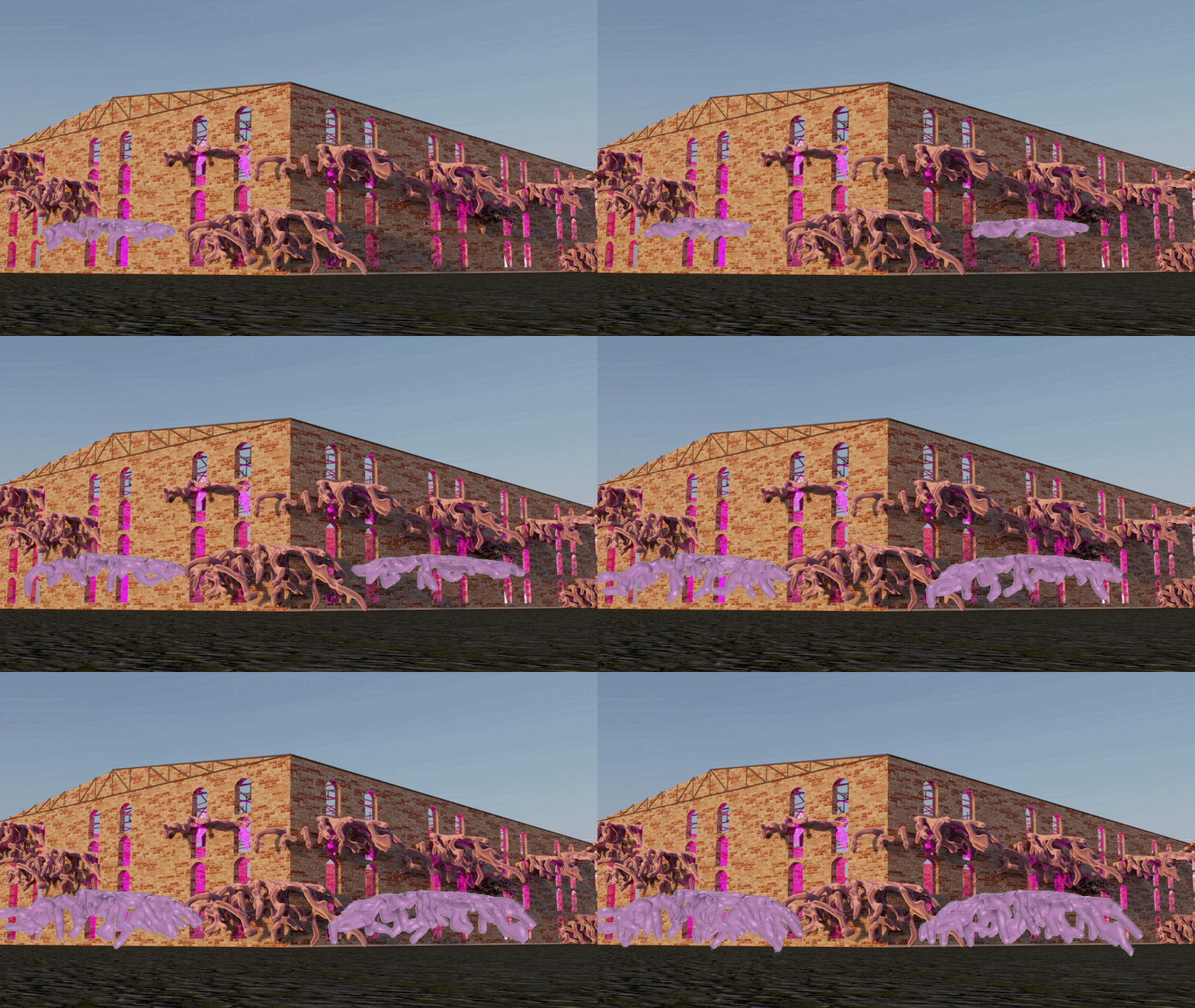
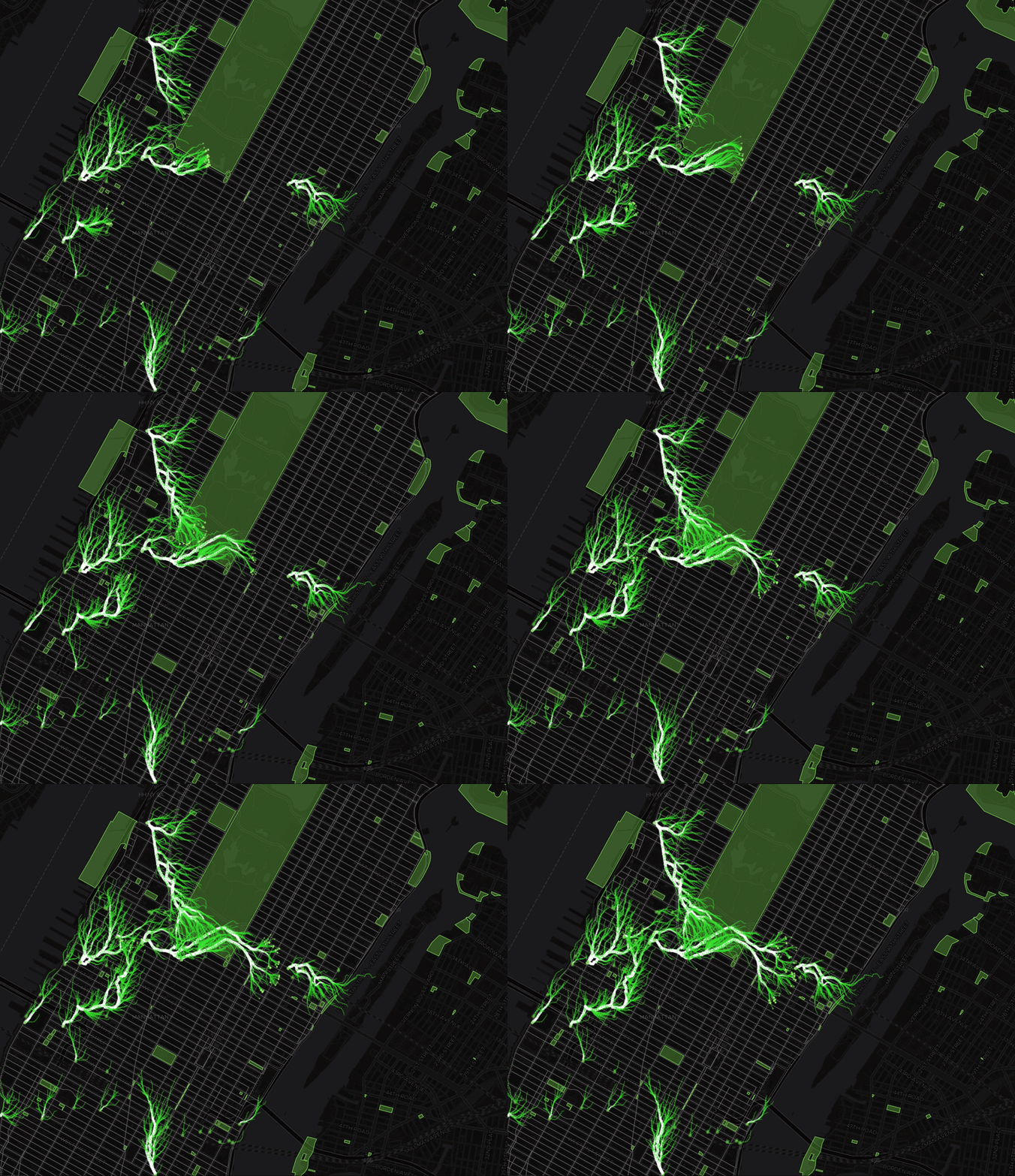
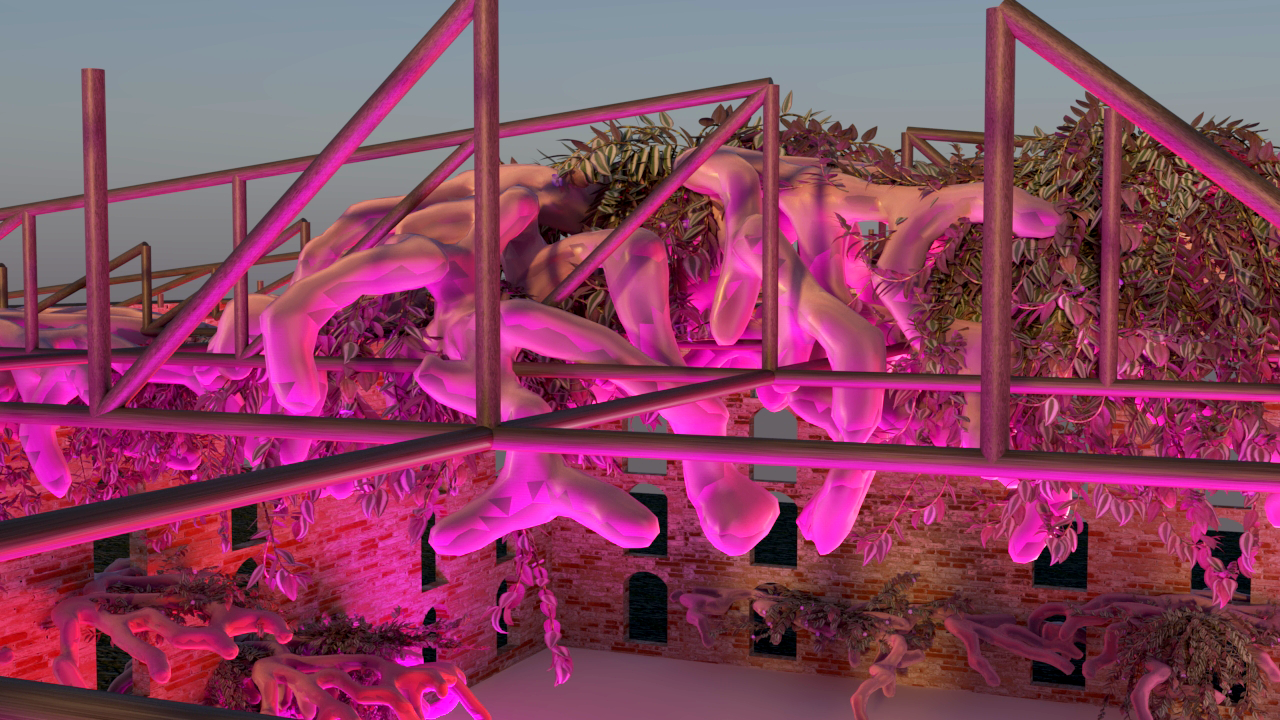
During the active growth phase of the experiment, a diffusion-limited aggregation algorithm was run in live connection with arduino, the conductance readings were acting as inputs for the growth parameters. The sensors witness a biological process and translate it as data into architectural form. The data itself represents a wound + recovery cycle in a 24 hour period. The structural failure on the abandoned warehouse becomes the seed points for the growth algorithm, mirroring the plant's growth logic: the plant does not grow despite damage, it grows from it.
In a city where material scarcity has made conventional reconstruction impossible, the decaying built environment becomes the only available substrate for new architecture.
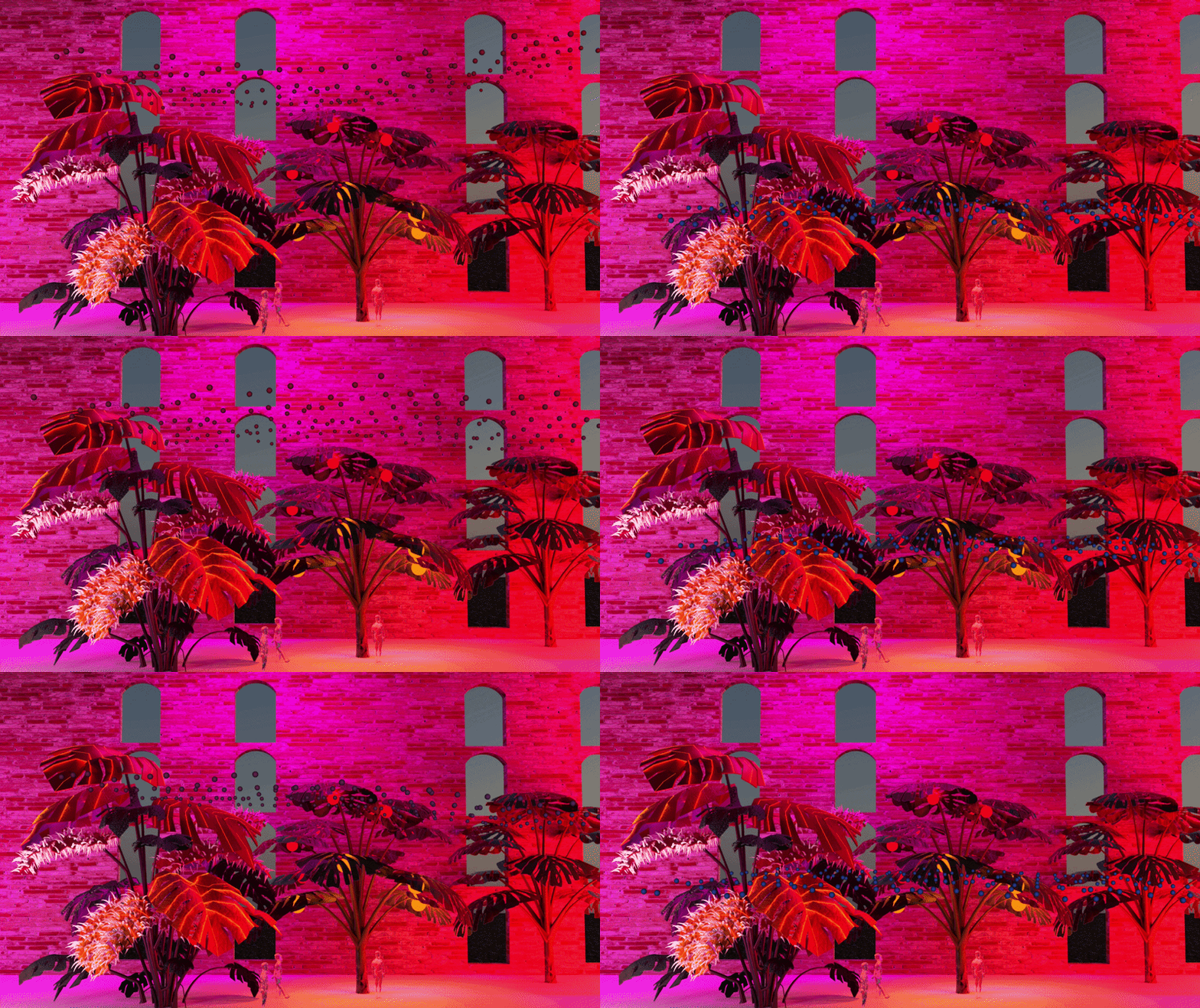
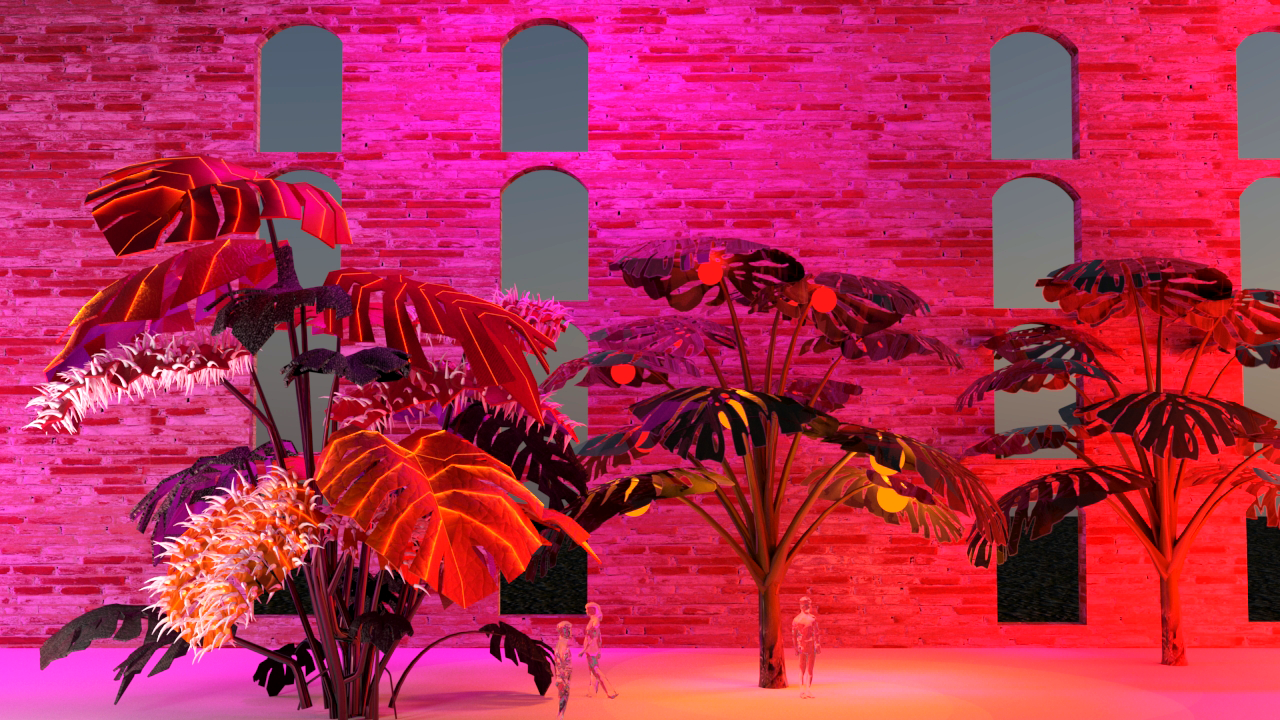
Living Feedback looks at a monstera's thermal capacity when introduced to extreme heat, extracting its transpiration process and measuring the ambient temperature and humidity in three different locations throughout the plant. The architectural goal is to observe the autonomous systems at play that sense, respond, and self-regulate, and how the plant responds to going beyond that threshold of self-regulation.
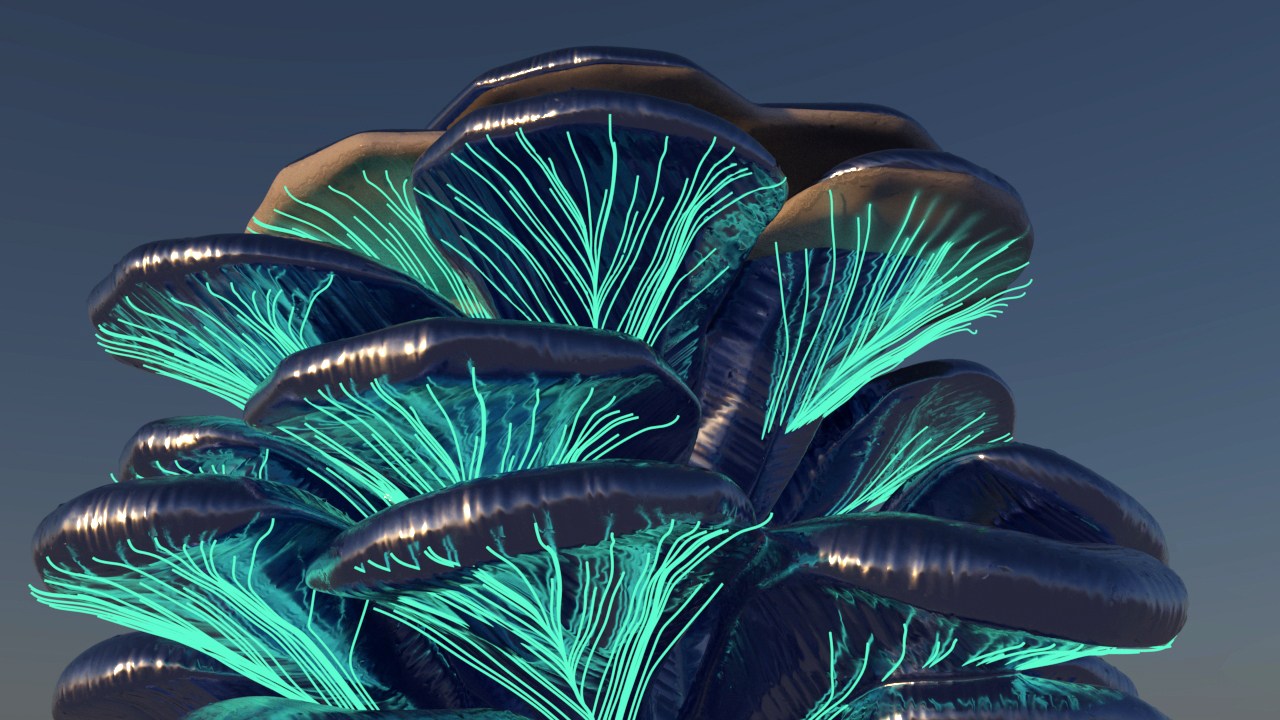
This project looks at mycelium and the electrical sensing of live substrate, inspecting the process of mycoremediation and speculating how it can grow at an urban scale. Blue oyster mushrooms are used as remediation methods for highly polluted or toxic areas. They feed on toxics, absorbing them and cleansing them from the environment, but they themselves become a toxic vessel, acting as a sacrificial organism.
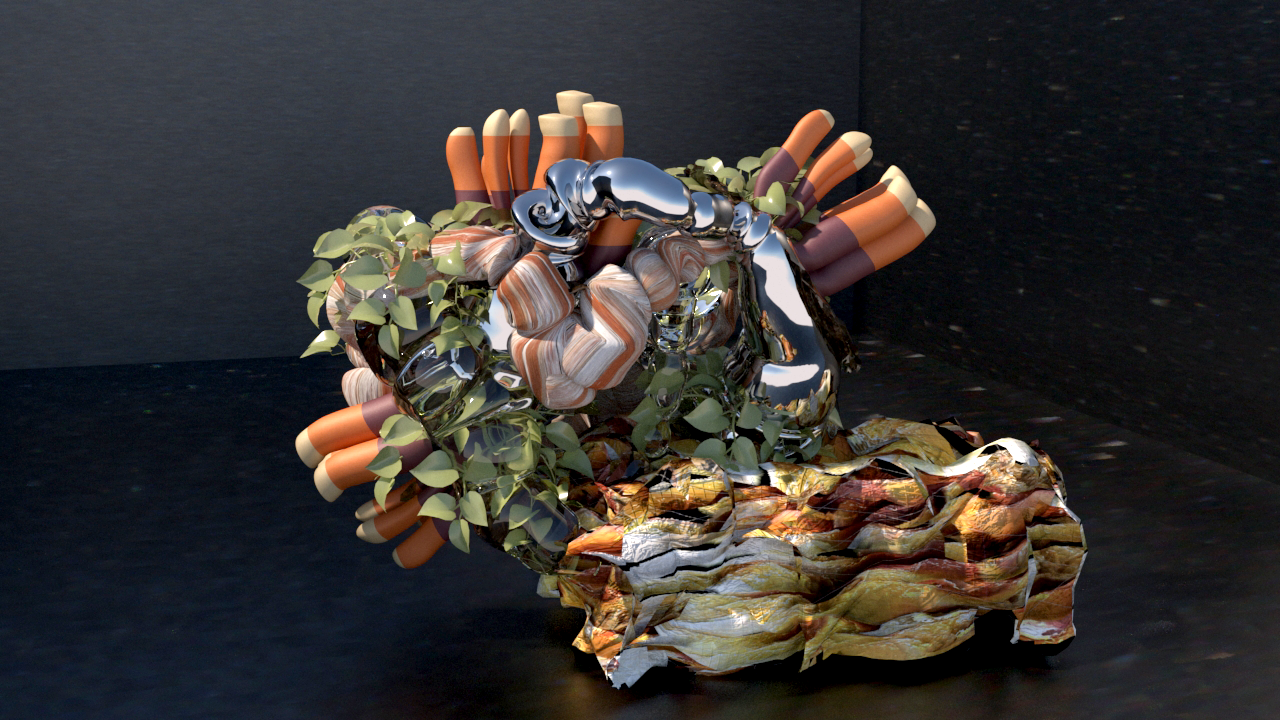
Architecture without an occupant looks at the relationship between a reishi mushroom and a pothos plant, exhibiting a symbiotic system in which the organisms create idyllic micro climate conditions for one another without human intervention, imagining a setting and a life form in a post-human world.
In conclusion, I'm asking what can we learn from these processes and how can we translate these systems into thinking for spatial design? How can designers bring an alternative perspective and contribute to this area of research? What could these living architectural systems look like on a larger scale when implemented into an algorithm? Or alternatively, how can this system exist and survive on its own with no intervention?